

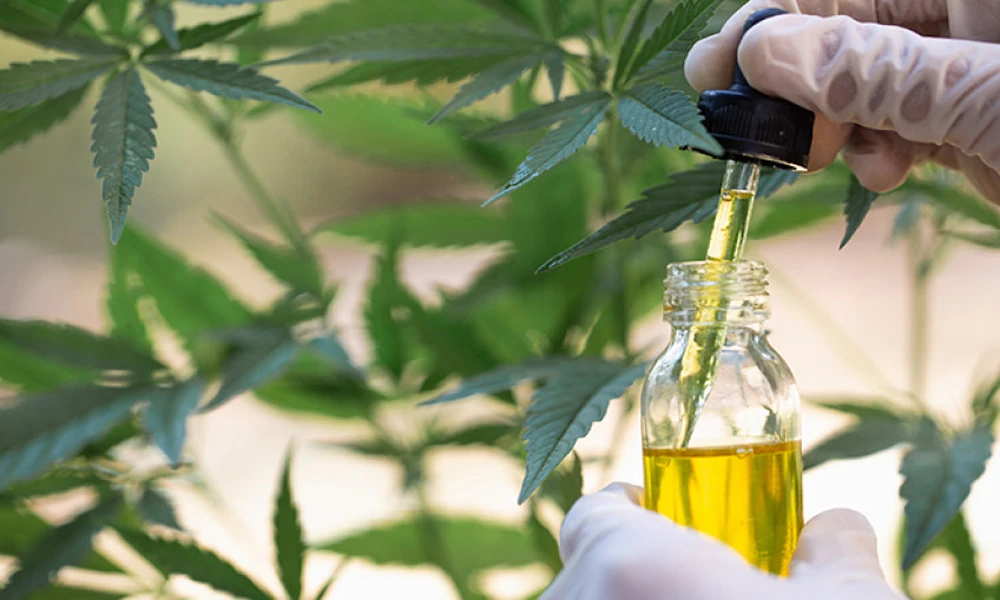
Three cannabinoids appear more frequently across hemp product labels than any others, and each one is a distinct compound with distinct properties. https://www.exhalewell.com/ carries products built around all three across different formats, and buying without knowing what separates them produces selections that do not match what the buyer was looking for. THCA, Delta 9 THC, and CBD are not interchangeable. They interact with the body through different mechanisms and produce different outcomes depending on the format and serving size involved.
THCA
THCA is the acidic precursor to THC found in hemp and cannabis plants. Raw products do not produce intoxication. Decarboxylation converts THCA to active THC. By using heat, a carboxyl group is removed from the molecular structure and the active form is produced. When enough temperatures are reached, combustion, vaporisation, and oven decarboxylation all occur.
Hemp flower products labelled with THCA percentages are not delivering that percentage as active THC without the conversion step. The calculation that produces total THC from a raw THCA figure applies a standard conversion factor that accounts for mass change during decarboxylation. The resulting total THC figure sits significantly lower than the THCA figure displayed on the label.
Delta 9 THC
Delta 9 THC is the primary active cannabinoid in both hemp and cannabis and carries the most extensively documented effect profile of any compound in the category. It is intoxicating. It interacts with CB1 receptors in the central nervous system. It produces effects characterised by altered sensory perception, body sensation, and, depending on the amount consumed, sedation or stimulation.
Hemp derived Delta 9 products comply with federal concentration limits that cap THC content at 0.3% of dry weight. Edible formats accommodate this restriction by using larger total weights to deliver meaningful milligram amounts within the percentage threshold.
- Delta 9 edibles have an effect onset of 30 minutes to two hours, depending on individual metabolism and food intake.
- Inhalation formats deliver Delta 9 to circulation faster, with onset typically within minutes.
- Duration extends several hours past onset for edible formats, longer than most inhalation sessions at comparable cannabinoid amounts.
- The effect character leans toward body sensation and sedation at higher serving sizes, stimulation and altered perception at lower ones.
CBD
CBD does not intoxicate at standard serving sizes. It interacts with cannabinoid receptors differently from THC variants. It does not bind to CB1 receptors with the same affinity that produces the psychoactive response associated with Delta 9 THC and THCA-derived THC. CBD is present across a wider range of retail formats and distribution channels than intoxicating cannabinoids. This is because its non-abusive profile places it in a different regulatory category in most markets.
Full spectrum CBD products retain trace amounts of Delta 9 THC alongside CBD and other minor cannabinoids within the 0.3% federal limit. Broad spectrum products remove THC through additional processing while retaining other cannabinoids. CBD isolate products contain only purified CBD with all other plant compounds removed.
CBD appears in formulations alongside Delta 9 THC and THCA-derived products to moderate effect intensity and broaden the compound profile of the final product. Its presence in a formulation changes how the primary cannabinoid is experienced rather than simply adding a separate effect on top. Knowing what THCA, Delta 9, and CBD each represent before selecting a product removes the primary source of mismatch between what a first-time buyer expected and what the product actually delivers.
